
The certificate of condominium ownership as the foundation for residential property ownership under the WEG
The certificate of separation is a fundamental document in condominium law in Germany. It serves as official proof that an apartment or premises not used for residential purposes are structurally separated from other apartments and common property. This certificate is essential for establishing separate ownership according to the German Condominium Act (Wohnungseigentumsgesetz - WEG). In this blog post, we will explore the legal basis, functions, and significance of the certificate of separation in detail.


Legal definition and purpose of the certificate of separation
The legal basis for the certificate of separation can be found primarily in Sections §3 (2) and §7 (4) of the Wohnungseigentumsgesetzes (WEG). The certificate of separation is an official declaration confirming that an apartment or premises not used for residential purposes are structurally sufficiently separated from the other apartments and the common property.

Key functions in condominium law
The most important function of the certificate of separation is that it creates a clear prerequisite for the establishment of separate ownership. According to German law, separate ownership can only exist for a structurally separate unit. This means that without the certificate of separation, the land registry office cannot execute the declaration of division or the division agreement. It is therefore not possible to create separate land registry pages for individual apartments. Together with the division plan, the certificate of separation forms the graphic and structural basis for a notarized declaration of division. This is necessary in order to legally define the relationship between common property and separate property. In addition, the certificate of separation also ensures greater security in legal transactions. It serves as reliable and official proof for buyers and sellers, as well as administrators and banks, which guarantees the legal existence and structural independence of the building spaces.

The distinction between individual property and common property
Indirectly, the certificate of separation also explains the boundaries between the separately owned property and the common property within a building. Only the rooms certified as separate in the certificate of separation can be subject to separate ownership. Separate ownership generally includes the following elements:
- The actual residential or commercial premises
- The non-load-bearing interior walls of the apartment
- The complete interior fittings such as floor coverings or non-load-bearing fixtures
- Associated ancillary rooms such as basements or attics. These must be lockable and assigned the same special property number
- Parking spaces or terraces, provided these are clearly defined in the allocation plan
Structural and formal criteria for separation
The official issuance of the certificate of separation is subject to strict structural requirements imposed by the legislator, which are intended to ensure that each unit within a building is functionally and spatially independent. To this end, a residential unit must meet certain requirements in accordance with the Condominium Act and the associated administrative regulations. The certificate of separation is issued by the local building authority and is required for the registration of ownership in the land register.Requirements for home ownership
Firstly, there must be a structural separation. The unit must be separated from the common property by solid and permanent walls and ceilings. The walls and ceilings must comply with building regulations and take into account sound and fire protection requirements, for example. In addition, there must be separate, lockable access to the residential unit. Access must lead either directly to the outside or to a common stairwell or common entrance hall. Access via another separately owned property is generally excluded under the Condominium Act. For the certificate of separation, it is also important that the residential unit allows for household management. The older version of the law explicitly stated that a kitchen and sanitary facilities must be available. This is no longer explicitly stated in the current version. Nevertheless, the certificate of separation requires that a kitchen or kitchenette, a bath or shower, and a toilet must be available. However, connections for sanitary facilities are usually sufficient for the certificate of separation to be issued.
Requirements for partial ownership
For rooms in which partial ownership is to be established, the requirements for interior design are less strict and restrictive. After all, these are rooms for commercial use or rooms not used for residential purposes. Nevertheless, the main criteria for the certificate of separation also apply to these premises. The premises in partial ownership must also be clearly separated from the other units in terms of construction and have their own lockable access. This also applies to associated ancillary rooms such as storage rooms and garages, which can also be clearly assigned to the separate property by means of the separate property number.

Parking spaces and outdoor areas as special cases
However, there are also special cases within the scope of the certificate of separation. Unbuilt areas such as carports or parking spaces, but also shares in gardens or terraces, do not require physical separation by walls or doors. Instead, they must be clearly defined by measurements and markings in the so-called allocation plan. The exact boundaries must be defined both dimensionally and graphically, which, among other things, underlines the central role and function of the allocation plan in the context of the certificate of separation.
The allocation plan – an important element for separate ownership
The certificate of separation is inextricably linked to the partition plan. While the certificate of separation confirms the separation of the special property or partial ownership, the partition plan provides a graphic representation of the partition. The partition plan therefore plays an essential role in the procedure and is indispensable for the creation of special property and partial ownership.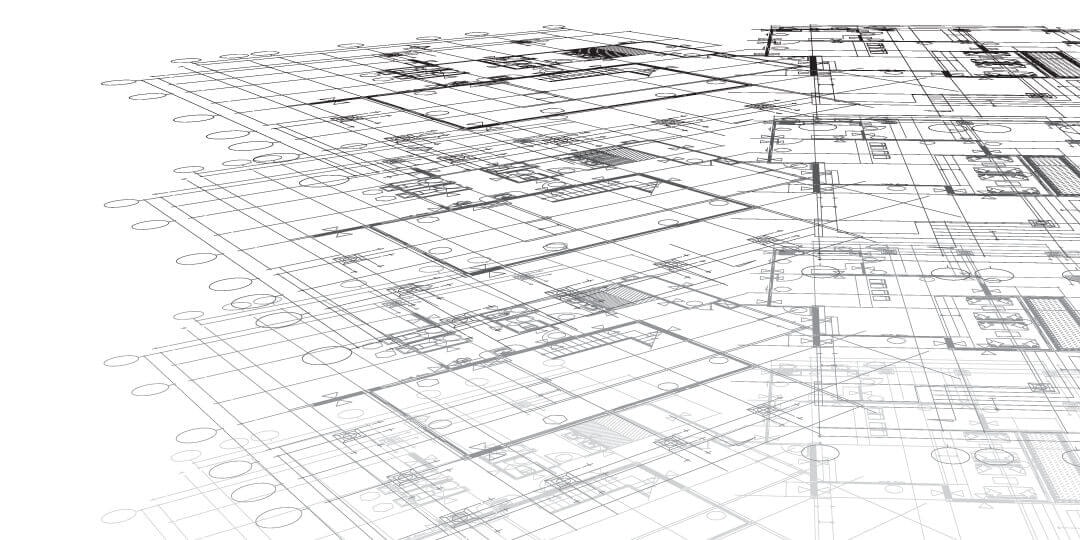
The role of the partition plan
The allocation plan is a construction drawing on a scale of 1:100, which must be submitted to the land registry office as part of the declaration of division. This is stipulated in Section 7 (4) of the Condominium Act. The plan must accurately show the location and size of all parts of the building that are privately owned and jointly owned. Each self-contained unit, including basement rooms and other premises, must be marked with a unique and identical number. Only rooms in common ownership remain unnumbered. The competent building authority uses the allocation plan to check whether the structural requirements for self-containment according to the Condominium Act are met and whether all markings have been correctly executed. The certificate of separation is usually attached directly to the partition plan itself and is therefore closely linked to it. The partition plan serves to geometrically and legally demarcate the separately owned property and should be drawn up by a specialist company. Precise dimensions and accurate markings are of crucial importance here.

Requirements for the documents to be submitted
Various documents are required for the application for the certificate of separation. These must be requested from the respective building authority, as requirements vary from state to state. The number of documents to be submitted may also vary. In most cases, all documents must be submitted in at least triplicate. The documents usually include the following:
- The informal application from the current or future owner
- The current land register entry for the property in question
- The site plan of the property on a scale of 1:1000
- The division plan on a scale of 1:100, including floor plans of all floors, sectional drawings, and elevation drawings
- The area calculation of the separately owned units and the calculation of the co-ownership shares
Process and procedure for the certificate of separation
The actual issuance of the certificate of separation follows an official procedure, which may vary from state to state. Responsibilities may also vary considerably. In this text, we will attempt to cover the various differences and distinctions without going into detail about each state.
The responsible authority
The lower building supervisory authority of the respective city or municipality is officially responsible for issuing the certificate of separation. This is therefore the local building authority or a comparable local office. In some federal states, the authority to issue the certificate of separation has been transferred to recognized and publicly appointed experts in the field of construction. This can shorten the administrative process and lead to shorter waiting times. It is important to understand that the certificate of separation is exclusively a technical determination of separation. It does not replace a building permit, nor does it check the admissibility of use under building law. The certificate of separation merely confirms that the structural division complies with the requirements of the legislator.

Application procedure and processing time
The application for the certificate of separation is submitted by the owner of the property. Once all the documents have been received, they are reviewed by the authorities or experts. They check whether the structural criteria for separation have been met and whether the division plan complies with the formal requirements. The processing time depends on both the complexity of the project and the workload of the building authority or experts. Therefore, the duration varies from several weeks to months. Only after the documents have been positively reviewed is the certificate of separation certified and attached to the partition plan.
Changes or updates to the certificate of separation
Once issued, the certificate of separation remains valid as long as the structural conditions continue to correspond to the documented plans. However, the certificate must be amended or updated if structural changes are made that affect the boundaries of the separate property or the separation itself. An update is also necessary in the event of changes in use that require a reassessment in accordance with the WEG. In these cases, a new or supplemented allocation plan must be drawn up, which also requires, among other things, the application for an amended certificate of separation.
The scope of the certificate of separation
The certificate of separation has enormous legal significance in many areas. For example, it is indispensable for the notary's declaration of division by the land registry office. Without the certificate, no condominium ownership or partial ownership can be established. Among other things, this can prevent the sale, mortgaging, or inheritance of separate residential units. The certificate of separation creates the technical and legal conditions for turning a multi-family house with only one owner into a building with several independent owners. The deed of separation also represents an important security for banks and other credit institutions. This is because banks must be certain that the separately owned property to be mortgaged is clearly defined in legal terms and is therefore marketable. In case of doubt, an incorrect or even missing document can even bring the mortgage process to a standstill. A deed of separation is therefore essential for financing. Buyers can also benefit from this document, including the partition plan. A look at the plans and a comparison with reality can give you security for your future property.

The certificate of separation: A conclusion
As can be clearly seen, the certificate of separation is more than just an official form. It is the official proof of the current structural reality, which forms the entire legal basis for residential and commercial properties. The certificate of separation allows a clear distinction to be made between separate ownership and co-ownership, thus representing the decisive step towards creating individual property units from a single plot of land. The certificate of separation is of utmost importance for owners, developers, and buyers alike.
All information has been compiled to the best of our knowledge. However, we cannot accept liability for the details.
This article is intended for general information purposes only and does not constitute legal advice.